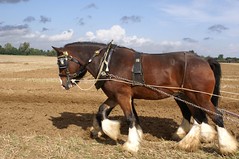
Looking down my family tree, many of my ancestors were Ag. Labs. Some had specific jobs such as Carter or Ploughman. One or two made it to Groom up at the Big House, but most of them were just employed at the nearest farm. Some of them started work at 10 years old - literally "farmed out" in the hope that they would have better nutrition at the farmer's table than their own - and of course, one less mouth to feed and perhaps even a little money for their parents when they began to earn a wage.
One of the books I have bought this year is one I've been hoping to find on a bookshop shelf for quite a while: Hodge and His Masters by Richard Jefferies. I believe the book was the ultimate result of a letter to The Times, although his "take" on the labouring rural poor was somewhat derided . . .
Here is what he wrote about the life of the carter:
"Another man who has to be up while the moon casts a shadow is the carter, who must begin to feed his team very early in order to get them to eat sufficient. If the manger is over-filled they spill and waste it, and at the same time will not eat so much. This is tedious work. Then the lads come and polish up the harness, and as soon as it is well light, get out to plough. The custom with the horses is to begin to work as early as possible, but to strike off in the afternoon some time before the other men, the lads riding home astride. The strength of the cart-horse has to be husbanded carefully, and the labour performed must be adjusted to it and to the food, i.e. fuel, consumed. To manage a large team of horses, so as to keep them in good condition, with glossy coats and willing step, and yet to get the maximum of work out of them, requires long experience and constant attention. The carter, therefore, is a man of much importance on a farm. If he is up to his duties he is a most valuable servant; if he neglects them he is a costly nuisance, not s much from his pay, but because of the hindrance and disorganization f the whole farm-work which such neglect entails."

