
How cute is this?
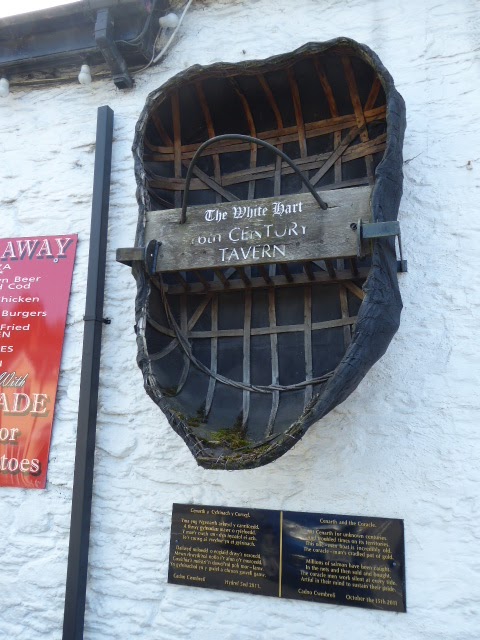
Coracles were much used here in the past, and not just for fishing, as I believe they when they dipped the sheep here, there were men in coracles to help guide them across to the far bank.


St Llawddog's spring on the edge of the river was considered a Holy Well.

Two views of the river below the bridge, near the Holy Well.


"This is Maenclochog 1 - which was first noted by Lewis Morris as being situated by the house of one William Lewis, who then moved it to another of his personal homes 14 miles (22.5 km) away at Cenarth. This was in 1776 (when a further source suggested that it was found 'at no great distance from a very large old camp,' subsequently identified as a prehistoric henge (with a now-destroyed Neolithic chambered tomb) from the surviving crop mark. In 1893, this stone made a further journey to its last and current resting place at Cenarth churchyard. The Roman lettering reads downwards: CVRCAGNI FILIAANDAGELLI (translated 'of Curcagnus son of Andagellus'.) It is related to the Pembrokeshire Llandeilo 1 and 2 grouping, with possibly familial names used. Dated 5th or early 6th C." (This is copied and pasted from my post on 'Ancient Crosses of the British Isles' Facebook page.


Lichen is often guilty of rendering inscriptions on old gravestones illegible, but here most of it can be seen well because of this white lichen.

Several more views of the river Teify above the bridge. Stunning.


Finally, on the way back to the car, this pretty little cottage had such a pretty garden still. I've taken photos of it before.
