Saturday, 31 October 2009

The Hairy Hands


Halloween deserves a spooky story, and the spookiest I know is this one, of the Hairy Hands, which manifested themselves along a stretch of the Postbridge road on Dartmoor, near the Powder Mills. Before our children came along, my husband and I used to camp on the moor near Postbridge, up along the West Dart. It was a lovely spot to camp, not quite so much fun getting back to it across the moor after our evening meal and a few beers at the pub, as you could scarcely see where to put your feet, even with a torch.

Anyway, I always used to frighten myself silly that if I got up to answer a call of nature in the small hours, I might meet up with the Hairy Hands. I developed a long-distance bladder because my fear usually kept me in my sleeping bag!

The stretch of the B3212 where the Hairy Hands were "seen" is between Postbridge and Two Bridges. In the dreaming golden years before the start of World War I, a number of very strange incidents occured along this stretch of the road, mostly near to a farm known as Archerton. People on bicycles reported having the handlebars wrenched from their grip so they ended up in a heap in a ditch, and driven ponies went out of control with similar results. Worse still, a local man, Dr Helby from Princetown, was taking his two children for a ride in the sidecar of his motorbike and sidecar, and it veered out of control, killing the Dr but fortunately his children survived. Not long after, a similar accident happened when an Army officer was riding his motorbike along this same stretch of road. He was badly injured but lived to tell the tale - and what a tale he told - a pair of "large, muscular hairy hands closed over his own and forced him off the road."

This made front page news and soon the Daily Mail had reporters investigating the story, although a subsequent enquiry decided that the road had an adverse camber and so road repairs were carried out to remedy this.

The story had died down by the mid-1920s, when a lady who was parked at the side of this stretch of road in her caravan, saw a huge hairy hand crawling up the outside of her caravan window. Terrified, she made the sign of the cross and the hand disappeared . . .

The photograph at the top shows the first bit of intake land we would walk along to get to our campsite, which was beyond the furthest trees.

Friday, 30 October 2009

The Witching Hour


This "face" is above the porchway of a church near Brecon. I think it's a bit "belt-and-braces" and paying lip-service to the pagan past.


As Halloween draws near, and children get excited and dress up in Halloween costumes, we think that all these Halloween shenannigans have come over from America with the Trick or Treat practices which fortunately we don't suffer here, as we are out in the sticks. However, to people in our not too distant past, witches and ghosties were very real belief.

The date of 31st October was when the festival of Samhain was celebrated in pre-Christian times. Samhain is derived from Old Irish and roughly translates as "summer's end". Our Celtic ancestors believed that on this night, the veil between this world and the next was very thin, and both good and bad spirits could pass through to their world. Harmful spirits were warned off by the wearing of costumes and masks which would confuse them into believing they had met one of their own kind and thus do no harm. Fire was a very potent part of the celebration, as indeed it was at Beltane (May Day) when cattle would be driven between twin bonfires to cleanse them and protect against evil spirits. This sometimes happened at Samhain too. However, the bonfire was more important as house fires would be doused and then relit using wood from the bonfire This was also a traditional time to reduce the livestock, which took much feeding over the winter months.

In our part of Wales, I think that people were rather more scared of people that were perceived to be witches, or to have the power to harm them or their livestock by curse or spell. Whilst carrying out renovation work on this old farmhouse (it is first mentioned in records of around 1485), we have found several devices against witches. All were over doorways.


In this photograph you can see the cat skull, the old child's tackety boot, and the mummified rat. All were tucked into walls and all above doorways (the cat a few feet above the doorway).

Several of our beams have odd marks on them. Some are almost definitely to match them in the building of the "extension", and the one below is obviously the re-roofing date for our attic, but others - well, I'll let you decide.

Not sure about this one . . .

This is one I am REALLY not sure about . . .

Below - instructions I think.

We haven't found any witch bottles, but they were often buried under hearths or just outside of the house to protect it. There is a link HERE to an interesting example recently unearthed. These have been found to contain urine (human or animal), nail clippings, human hair, bent pins, pieces of wire, bent iron nails, and sometimes a felt or cloth heart pierced with pins. One example contained 9 bent brass pins, but I don't know if the number has to be specific. Many of these heavy ceramic bellarmine witch-bottles (a name given to a specific style of German-made bottles with an old man's "greybeard" face on.) These are particularly abundant in East Anglia/Suffolk. The pierced cloth heart would be a malevolent sort of magic one assumes.

The urine was the most important ingredient, as this account of "counter-witchcraft described by Joseph Blagrave of Reading, in his Astrological Practice of Physick, published in 1671, as one of a number of 'experimental Rules, whereby to afflict the Witch,causing the evil to return back upon them'. His recipe is as follows:

Another way is to stop the urine of the Patient, close up in a bottle, and put into it three nails, pins or needles, with a little white salt, keeping the urine always warm: if you let it remain long in the bottle, it will endanger the witche's life: for I have found by experience that they will be grievously tormented making their water with great difficulty, if any at all, and the more if the Moon be in Scorpio in Square or Opposition to his Signifiator, when its done."

Of course, we are not the least bit suspicious these days. We never throw spilt salt over our left shoulder, try not to cross knives, hang horse-shoes up for good luck, touch wood and whistle, cross our fingers, touch our collar if we see a magpie, even tread on the cracks in the paving stones . . . and those lucky stones with holes through them that we bring back from the beach . . .

Thursday, 29 October 2009

Family History


In recent weeks I have hit the Family History trail again, this time following up my dad's mum's line in the South Hams in Devon. Via Genes Reunited, I was delighted to discover a new 2nd cousin (our g. grandfathers were brothers). She has just sent me a lovely parcel of family photos and certificates, including my g. grandfather's death certificate. That has given us both quite a shock, as we discovered that he had committed suicide, by drowning.

I was gardening yesterday afternoon, and as I weeded the very overgrown bed I was able to give this much thought, and came in and wrote this poem to his memory. He had been widowed in 1904, when his wife died aged only 37 (and quite probably of the bowel cancer which claimed her daughter, my gran, at the age of 41) and was left with two little girls to bring up alone. He became a publican for several years, but this obviously all came to an end during the First World War and on his death certificate his occupation was "sawyer, Journeyman", which I believe means he was paid by the day, however skilled he was (he had originally been a Journeyman Baker).

IN MEMORIAM

The tide sucks at the river, making boats lurch and sway,
Eddying round the ladder clamped to the stone wall,
Reflecting the moon like Van Gogh's' Starry Night,
Ripping the stars to shreds in the current
As it argues its way down the leat,
Spreading like a silent scream of watery echoes,
Edging busily up the brickwork, lifting the tangles
Of seaweed like a mermaid's tresses.
Combing them with salty fingers and leaving them to float.
It beckons to the silhouette on the footpath,
Writing his name in immortality, promising
A future where there can be none. Weak flatterings and
Blandishments it makes to him, cajoling, enticing,
Coaxing movement from that lonely figure,
Offering one last embrace, no questions asked.

Wednesday, 28 October 2009

Mother Eve's Pudding

Hmmm - I caused confusion yesterday with the "two pennyworth of eggs when they're 2d a quart", so here's a slightly different version of the same puddign from yesterday's post, and also from the same book:

MOTHER EVE'S PUDDING

If you'd have a good pudding, observe what you are taught,
Take two pennyworth of eggs when twelve for the groat (4d) (e.g. 6 eggs!)
And of the same fruit that Eve had once chosen
Well pared and well chopped at least half a dozen.
Six ounces of bread (let your man eat the crust),
The crumbs must be grated as fine as the dust.
Six ounces of raisins from the stones you must sort
Lest they break all your teeth and spoil all your sport
Five ounces of sugar won't make it too sweet,
Some salt and some nutmeg will make it complete
Three hours let it boil without hurry or flutter,
And then serve it up without sugar or butter.

Tuesday, 27 October 2009

Paradise Pudding


I just happened to wander into Oxfam when I was in town yesterday, which was naughty of me, as I have been trying to wean myself off this particular addiction since prices have gone considerably up in the past year. Anyway, I was just convincing myself that there was nothing worth buying anyway when my eye just happened to fall on a spiral bound book. I hesitated, drew it out, and saw the words "Devon W.I. Cookery Book" on the cover. Well, I was bounden to buy it of course, and it was only 99p, so . . . It has an interesting selection of recipes - some I recognize already from my Farmhouse Fare and other similar old books - but others completely new to me, like this one for Paradise Pudding. I don't know how old it is but I would guess that it could well be around 1850. A quart of eggs contained 20, by the way, but I think this would mean use two eggs and not twenty! :

PARADISE PUDDING

"If you'd have a good pudding pray mind what you're taught
Take two pennyworth eggs when they're 2d a quart,
Take of the same fruit which Eve once did cozen,
Well pared and well grated at least half a dozen.
Six ounces of bread, let the maid eat the crust,
The crumbs must be grated as small as fine dust.
Six ounces of currants and pray pick them clean,
Lest they grate in your teeth, you know what I mean.
Six ounces of sugar won't make it too sweet,
Some salt and some nutmeg to make it complete.
To this you can add, if you're willing and handy,
Some good lemon peel and a glass of good brandy.
Three hours let it boil without hurry or flutter,
And then erve it up with some good melted butter.
Adam tasted the pudding, 'twas wonderfully nice,
So Eve cut her husband another good slice."

A Hawthorn Berry by Mary Webb

I have taken a leaf from my dear friend across at Where Beechmast Falls, who posted beautiful Mary Webb poem yesterday. For some reason, Blogger is not flagging her blog up when she makes a fresh post, so please visit daily as regular postings will be missed otherwise - and that would be such a shame, as Dartford Warbler posts such interesting things and lovely photos.


A HAWTHORN BERRY

How sweet a thought,
How strange a deed,
To house such glory in a seed -
A berry, shining rufously,
Like scarlet coral in the sea!
A berry, rounder than ring,
So round, it harbours everything;
So red, that all the blood of men
Could never paint it so again.
And, as I hold it in my hand,
A fragrance steals across the land:
Rich, on the wintry heaven, I see
A white, immortal hawthorn-tree.

Mary Webb

Monday, 26 October 2009

2011 census


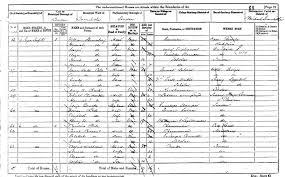
Just seen that "invasion of privacy" - by the Government - has hit new heights with the questions they intend to ask in the 2011 census. Now, I'm sure in 200 years' time someone still working on the Bolt family tree may be fascinated to find out how many bedrooms I had in my house, but personally, I do not think that it is a useful tool for the current Government, except as something else to tax us on and probably check against Council Tax documents. I am glad we are allowed to call ourselves English again (as indeed I did last time anyway), but I should imagine that the dynamics of propinquity in a multi-let building is going a bit far.

What really made me roll on the floor laughing was the question about command of the English language. For those filling out the census there is a choice of "very well, well, not well or not at all". Hmmm - is it only me that thinks that the "not at all" - indeed the entire census form! - would be a tad lost on those in that particular household if it applied to all?

I dare say there will be some lies being put down, even some damned lies - but will they just be statistics?