A sitting room as it would have been in the 1950s.

Finally, the other half of the post about beautiful Brockhampton Manor. It has been laid out to take you throughout its history, from the 15th C up to the present day. It was saved from utter dereliction when a visitor, John Buckler (an architect) visited the Big House which had been built on higher ground. Tenant farmer had done the property no harm by modern improvements, but the Barnebys had done nothing in the way of maintenance in the past. Fortunately the then-owner, John Habington Lutley listened to Buckler's plans and an ambitious restoration began. Even the moat underwent restoration and now is home to ducks and wildlife.

Inside the gatehouse, there are "Marian marks" - the double VV's conjoined which are religious marks symbolizing the Virgin Mary and indicate that Catholic masses were once held here (at a time when they were illegal). I didn't go upstairs as some other folk had just gone up, so I missed these. There were also burn marks, often found in properties dating from 15th - 18th C and a superstitious idea to protect the building from fire damage.

In the Parlour, is an old saddle and bridle and pair of leather boots, along with the travelling case below (I don't think is was a saddlebag as described as wrongly shaped).


Upstairs, WW1Uniform laid out on the bed, and a memory of another soldier, Albert Sprague (whose room it was), and who sadly died at the Battle ofCambrai. His father was the Gamekeeper on the estate and young Albert had been an "Ag. Lab" until signing up.


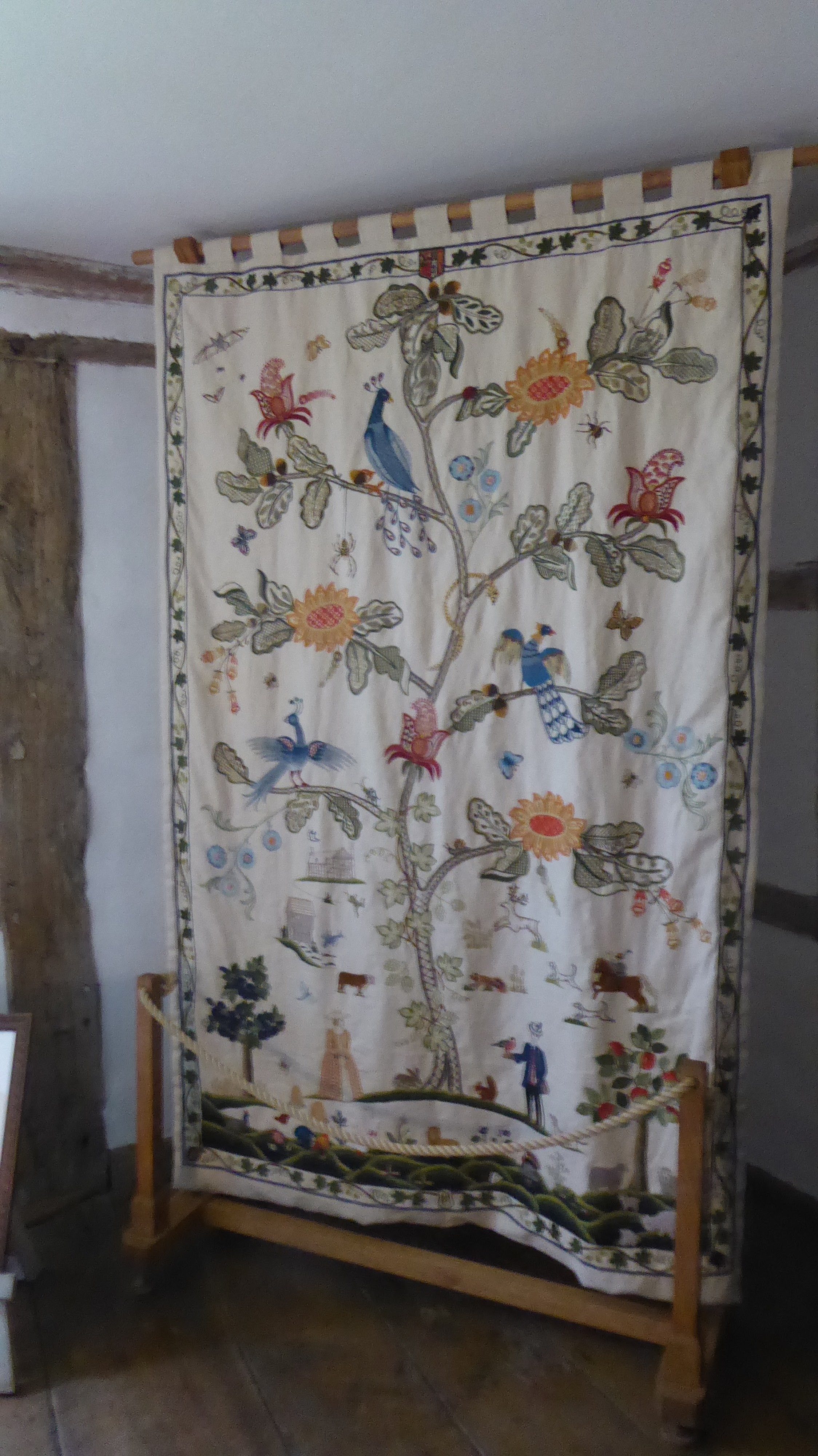
Isn't this a lovely work of art?


The ruined Chapel, where a piece of Malvernian pottery (see modern pieces in the Buttery photos in Part 1) was found. It dates between 1166 and 1200, during Bernard of Brockhampton's time here.


Finally, the outside of the house. All the windows were to the front and side.
Update: everyone is for me getting a ginger kitten so I shall take a walk up there tomorrow . . .
Meanwhile I managed to splash Cif cream cleaner into my right eye last night when scrubbing the sink. I washed it out but it was gummy overnight and feels like I've had a right hook this morning! Hopefully it will mend as I don't fancy the 40 mile drive to Hereford A&E and a weight of 6 - 10 hours or more . . .
