Wednesday, 22 August 2018
Final St Dogmael's post
Finally, some interesting early Christian Monuments, and elements of the ruined abbey are in a room beyond the cafe area, with explanatory boards. Enjoy. Another castle in the next post.


Sunday, 19 August 2018
St Dogmael's Abbey
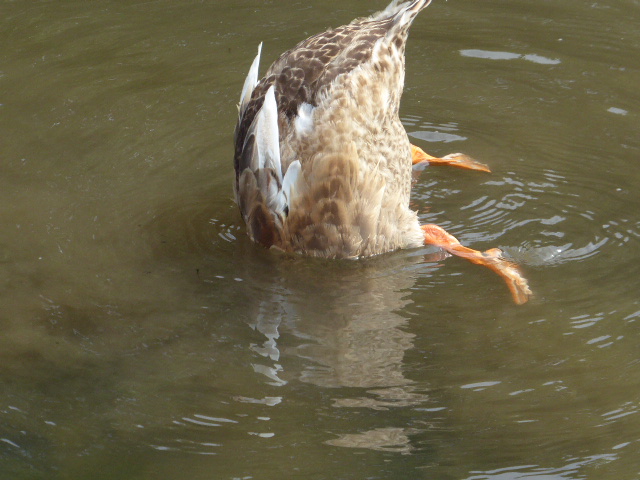
St Dogmael and a replica of an Early Christian Monument. He was a Welsh monk and member of the House of Cunedda who preached in Pembrokeshire and then Brittany. The statue was commissioned by Ian Gollop to celebrate the Queen's Golden Jubilee in 2002. It is sited beside the mill pond for the water mill, which is beloved of ducks . . . .
The Welsh name for St Dogmael's is Llandudoch, which translates to . . . Dogmaels!
After swiftly going to the Mill for our flour before it shut for lunch, we then visited St Thomas' Church. I recalled this memorial stone to Sagranus having a rather unpleasant "vibe" and yup, it was still in a bad mood. I found it rather unpleasant standing close to it and was glad to move away. It is broken, and was probably originally a standing stone which has been re-used in a later age. The use of both Latin script (for the name) as well as Ogham lettering (the scratch type marks on the edges to the left) allowed the Irish Ogham language to be translated for the first time. The inscription dates to the early 6th Century and was set up to mark the grave of the local chieftain of that name.
It is made from spotted dolerite and came from many miles away at Carn Meini.
Also in the church are two more Early Christian Monuments:
A portion of a slightly incised Maltese Cross within a circle. A headstone of a type commonly used between the 9th and 11th Centuries.
This is a 9th - 10th Century cross stem .
You would think that this church has always been the most hallowed building, with the early Celtic "clan" having been on this site (until obliterated by a violent Viking raid in 988). However, it is recorded that in 1614 - 17, a certain Rev. Thomas Price was the Vicar, but oh dear me, in 1616 he found himself up before the Magistrate charged with "for keeping at St Dogmells without a licence, a common tippling house and for selling ale and beer" !!!
Beautiful stained glass windows.
Inside the church (and out) were memorials to the mariners of St Dogmael's - in fact outside, nearly ALL the memorials were to men who had perished at sea. Ships were built here just a stone's throw from the Abbey and Cardigan - a couple of miles upstream, was a VERY important port.
A bigger picture of the altarpiece.
Just two of the many gravestones to brave sailors who died doing the job they loved. If you read the places they sailed between, you realize every voyage must have been fraught with danger - imagine going around Cape Horn in a sailing ship. Valparaiso was one of their destinations.
Saturday, 18 August 2018
St Dogmael's Abbey
For Sue - my Marble Cake :
As you can see Sue, it wouldn't have won any prizes because it rose in the middle, but it tastes pretty good! I think my mum used to just combine the two in one bowl at the end, stir once or twice and then put it in the tin, and it came out with chocolate swirls. I "layered" mine.
Now on to St Dogmael's . . .
It dates back to the 6th C, but nothing remaining of that building. This was the Infirmary. These venerable old buildings of course, fell into disrepair after the Dissolution of the Monasteries by Henry VIII. He had a lot to answer for. I think he had a lot of explaining to do if he headed up to the Pearly Gates. You can just imagine St Peter's line of questioning can't you?!!!
I think the holes in the wall here are the putlog holes, as they are far too small for timbers to support floors. Putlog holes reflect where the scaffolding went when it was being built.
The end wall of the Infirmary, showing structural weakness from water getting between the stones and then being frozen and causing this damaging crack. It would appear to start from the inset in the wall which would have held the main roof timber originally.
Steps to nowhere, but originally to the West Range.
In its time it would have been very impressive. It was originally built by the Tironensian Order who came from France, and this was their only house in Wales. Most of their others were in Scotland. They became part of the Benedictines in the 17th C.
A lovely patch of wild flowers had been sown, and the insects and butterflies loved it.
We just made the Flour Mill before it shut for lunch and we bought 4 bags of Stoneground Flour (2 granary and 2 wholemeal) plus a bag of Oatmeal. I love water mills and always feel so at home there.
Above and below: the flour as it has been ground by the millstones comes out through this little chute.
Finally some of the scenery of the Preselis. The following photos were taken on the way up towards Cardigan, and are in sequence. Back with a couple more (long) posts about St Dogmael's later.
As you can see Sue, it wouldn't have won any prizes because it rose in the middle, but it tastes pretty good! I think my mum used to just combine the two in one bowl at the end, stir once or twice and then put it in the tin, and it came out with chocolate swirls. I "layered" mine.
Now on to St Dogmael's . . .
It dates back to the 6th C, but nothing remaining of that building. This was the Infirmary. These venerable old buildings of course, fell into disrepair after the Dissolution of the Monasteries by Henry VIII. He had a lot to answer for. I think he had a lot of explaining to do if he headed up to the Pearly Gates. You can just imagine St Peter's line of questioning can't you?!!!
I think the holes in the wall here are the putlog holes, as they are far too small for timbers to support floors. Putlog holes reflect where the scaffolding went when it was being built.
The end wall of the Infirmary, showing structural weakness from water getting between the stones and then being frozen and causing this damaging crack. It would appear to start from the inset in the wall which would have held the main roof timber originally.
Steps to nowhere, but originally to the West Range.
In its time it would have been very impressive. It was originally built by the Tironensian Order who came from France, and this was their only house in Wales. Most of their others were in Scotland. They became part of the Benedictines in the 17th C.
A lovely patch of wild flowers had been sown, and the insects and butterflies loved it.
We just made the Flour Mill before it shut for lunch and we bought 4 bags of Stoneground Flour (2 granary and 2 wholemeal) plus a bag of Oatmeal. I love water mills and always feel so at home there.
Above and below: the flour as it has been ground by the millstones comes out through this little chute.
Finally some of the scenery of the Preselis. The following photos were taken on the way up towards Cardigan, and are in sequence. Back with a couple more (long) posts about St Dogmael's later.
Subscribe to:
Posts (Atom)